Anúncios
A well-organized document scanner station helps users turn paper into searchable digital data with less friction. It pairs compact design and the right document imaging software to speed the process and protect sensitive information.
This introduction outlines clear tips for choosing a reliable scanner and the top features look for in modern devices. It covers performance, character recognition, integration with document management tools, and ergonomic space design.
Readers will learn how the right combination of imaging software, settings, and simple workflow changes saves time. The guide also explains how optical character recognition and text access turn paper into searchable assets.
Next, the article will check article top features and provide practical advice on scanner station setup and document imaging choices that fit present-day technology and user needs.
Designing Your Ideal Home Scanning Station Setup Ideas
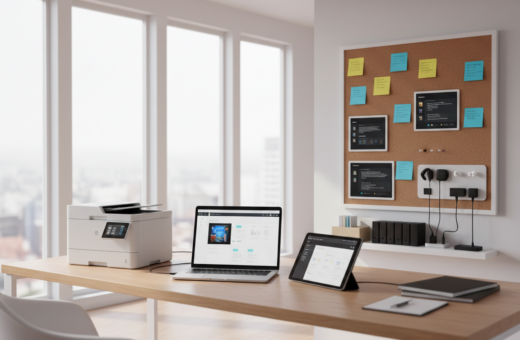
An efficient scanner layout balances device performance with the available desk and floor space. It helps users maintain a tidy area that supports fast, daily capture of paperwork.
Anúncios
Choose a flatbed when originals need gentle handling or larger formats, but expect a bigger footprint. Opt for a sheet-fed document scanner when space is limited; these units tuck neatly onto narrow desks.
Practical design choices include measuring furniture before purchase and reserving a dedicated corner for supplies and cables. Good cable management and a small tray for outgoing scans make the workflow smoother.
- Assess the room to confirm the device fits comfortably.
- Prioritize high-speed models only if volume demands it.
- Keep the area clear to encourage regular use of the scanner station.
By organizing the scanner station setup around needs and space, users create a professional, repeatable process that boosts productivity.
Anúncios
Creating an Ergonomic Workspace for Daily Productivity
A well-lit, ergonomic workspace reduces fatigue and makes daily document capture faster. Small, intentional changes to lighting and furniture help users stay focused and save time.
Importance of Proper Lighting
Adequate illumination cuts eye strain and improves accuracy when handling paper and screens. Bright, indirect light reduces glare on monitors and on the document surface.
Tip: place task lighting so information is clearly visible without casting shadows on pages.
Ergonomic Furniture Essentials
Comfort matters. Only 46% of Australian workers report using an ergonomic chair, and just 27% have an adjustable desk. Investing in these items supports posture and reduces fatigue.
Portable tools matter too: 42% of workers face challenges transporting gear, so choose compact devices that fit your spaces.
- Use an adjustable desk for sit-to-stand flexibility.
- Set monitor height so screens are at eye level to lower neck strain.
- Keep the document scanner within easy reach to maintain flow.
Good design balances comfort and workflow. By optimizing the workspace environment, users protect their health while managing data and documents with modern technology.
Selecting the Right Scanner for Your Workflow
Picking a scanner that matches your workflow prevents bottlenecks and keeps data protected. The choice between flatbed and sheet-fed models affects speed, handling, and daily performance.
Flatbed scanners suit delicate originals and bound materials. They prioritize careful handling and high-quality image capture. Use 600 DPI for images or archival copies to preserve detail.
Sheet-fed scanners excel in high-volume environments. They speed bulk document capture and reduce time per page. For routine text, 300 DPI provides readable, searchable scans while saving storage and time.
Security and integration matter. Modern devices offer encryption and direct-transfer options—Kodak Alaris, for example, sends files straight to a computer to avoid local storage risks. With breaches averaging over $4 million, these safeguards are essential.
- Resolution & settings: 300 DPI for text, 600 DPI for images.
- Optical character recognition: prioritize scanners that support OCR to turn pages into searchable text.
- Software & access: choose scanners that integrate with document management tools and strong security features.
Leveraging Document Imaging Software and OCR
Document imaging software turns stacks of paper into searchable files with a few smart settings. Optical character recognition (OCR) is the core technology that converts scanned images into editable text.
Effective imaging solutions cover preparation, capture, validation, and export. They speed the process and reduce manual entry so users spend less time on repetitive tasks.
When teams look document scanner and software options, they should verify top features look for: batch processing, error correction, and seamless integration with document management tools.
“Advanced character recognition turns paper into accurate digital information.”
- OCR makes files searchable and editable, improving data access.
- Integration with management systems automates routing and storage.
- Professional imaging software boosts scanner performance and accuracy.
By choosing the right software and solutions, a document scanner station becomes a reliable hub for turning physical records into valuable, organized information.
Efficient Document Preparation Techniques
A clear document prep routine cuts errors and speeds every batch through the scanner. Preparation reduces jams, improves OCR results, and saves time when processing large volumes of pages.
Sorting by Size
Sort pages into same-size stacks before feeding them to the document scanner. This helps the document scanner pick sheets evenly and keeps the process moving.
Removing Staples and Clips
Always remove staples, paper clips, and sticky notes. These items cause paper jams and can damage scanner rollers.
Straightening Pages
Straighten and align pages in a flat pile. A quick fan of the stack reduces skewed scans and lowers the need to re-scan images.
- Proper prep is a critical step in the scanning process to avoid frequent errors.
- Use document imaging software and optical character recognition during review to confirm that text and character recognition meet quality needs.
- A tidy document scanner station with a small prep area improves throughput and long-term data quality.
“Consistent preparation is the hallmark of an efficient scanner station.”
For tips on automating this process, see the guide to automate document scanning.
Automating Your Scanning Process for Maximum Efficiency
Streamlining document intake with automated tools speeds throughput and cuts errors. When organizations add automation, routine tasks move from people to reliable software. This improves performance and reduces time spent on manual entry.
Integrating with Document Management Systems
Integration is the critical step that turns captured pages into usable data. Tools like PSIcapture connect to over 60 document management systems, ensuring information lands in the right workflow.
About 40% of organizations report trouble digitizing business inputs. Automating the scanning process helps overcome that gap by routing files and applying optical character recognition (OCR) automatically.
- Seamless transfer: integration reduces duplicate work and speeds access to data.
- Automated separation: imaging software settings split batches by document type, cutting review time.
- High-volume performance: modern scanners process many pages while preserving character recognition quality.
- Security & access: routed files reach document management systems with proper controls in place.
“Automating the scanning process creates a productive environment where technology handles the heavy lifting of document management.”
By pairing a high-performance document scanner station with advanced imaging software, users gain faster access to critical information. These features look for in professional environments reduce manual labor and keep workflows consistent.
Conclusion
A compact, repeatable scanner workflow turns paperwork into usable data with far less friction.
By choosing the right document scanner and pairing it with reliable software, users make capture fast and repeatable. This improves access to data and reduces time spent on manual tasks.
Prioritize ergonomic lighting and a tidy scanner station so daily use feels natural. Implement document imaging and character recognition to keep information searchable and secure.
These practical features and routines help any home office move toward a paperless process. With a well-maintained scanner station, teams gain better organization and stronger document control for long-term productivity.